

Perry Porkins
Perry covers the institutions, movements, and experts bravely working to make common sense controversial.
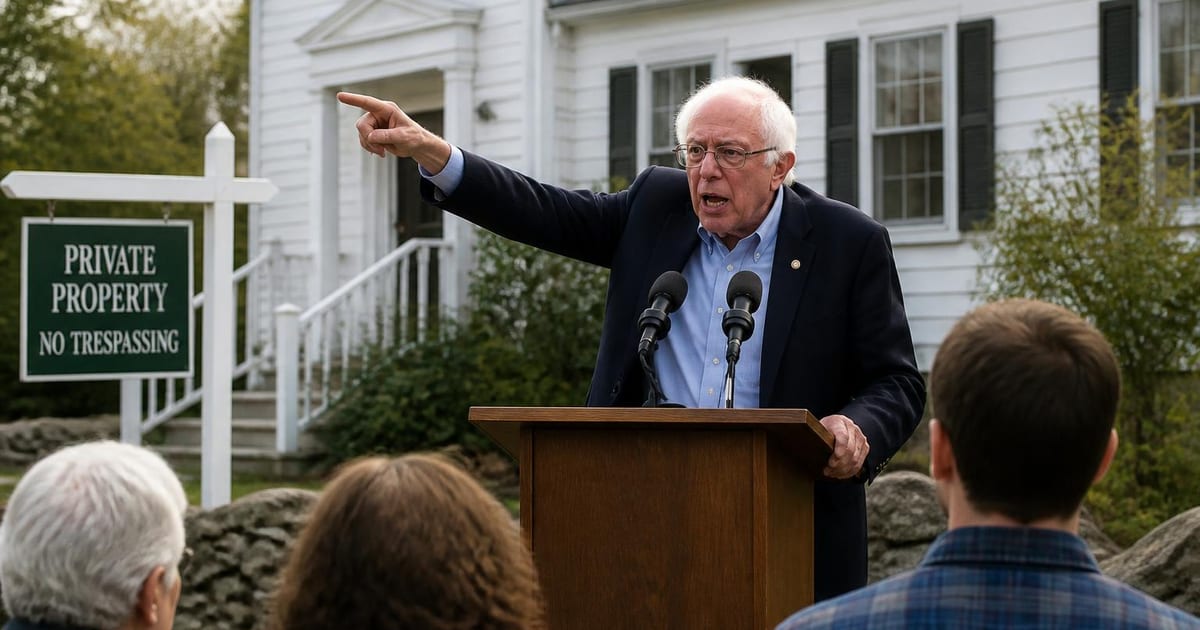
WASHINGTON — Senator Bernie Sanders this week called for higher taxes on wealthy Americans, citing a poll showing broad public support for making the rich pay more, and triggering a familiar Washington ritual in which everyone agrees the rich should pay more while disagreeing intensely about who counts as rich.
Conservatives quickly accused the Vermont senator of hypocrisy, pointing to his own status as a millionaire with multiple properties as evidence that his definition of wealthy conveniently excludes himself. The exchange was promptly immortalized by The Woke Times under the headline Bernie Demands Millionaires Pay Their Fair Share. Starting With Other Millionaires, which gently suggested that class warfare, like charity, begins with other people.
In the satirical telling, Sanders has not so much declared war on the wealthy as proposed a highly targeted redistribution beginning with the other wealthy, a hitherto overlooked subcategory of the affluent. Under this widely understood interpretation, the burden of fairness would fall first upon millionaires whose wealth was acquired without the accompanying decades of denunciations of millionaires, thus preserving a vital moral distinction between millionaires who warn against millionaires and millionaires who simply are millionaires.
Policy observers noted that the framework resolves a longstanding ideological logistical problem: how to maintain that millionaires are the problem while also being a millionaire, a conundrum previously thought to require at least a footnote.
The proposed solution is elegant in its simplicity. The rich, in this formulation, remain an abstract economic category best taxed at a higher rate, while the properties in question remain a concrete and understandable necessity of public life and book sales, not to be confused with wealth in the pejorative sense.
Supporters praised the consistency of calling for higher taxes on the wealthy while citing public polling, arguing that broad support for taxing the rich is itself evidence of sound policy. Critics, meanwhile, praised the consistency of pointing out multiple properties, arguing that broad ownership of property is itself evidence of something else entirely.
Both sides agreed that the only thing more popular than making the rich pay more is ensuring someone else qualifies as the rich.
- 1Associated Press Mourns As 1,200 Migrants Tragically Become Someone Else’s Immigration Policy.
- 2Elizabeth Warren Demands Wall Street Stop Looting America So Washington Can Get Back To It.
- 3Trump Ends Taxpayer Benefits For Illegal Immigrants, Democrats Warn America Is Becoming A Country Where Benefits Go To Citizens First.