
America's Long National Experiment In Consistent Messaging Concludes Successfully, Officials Announce
In the spring of 2020, after months of instructing Americans to remain home, maintain physical distance and avoid unnecessary contact to slow the spread of the coronavirus, the nation's public health establishment faced a novel ethical dilemma and resolved it with admirable creativity.
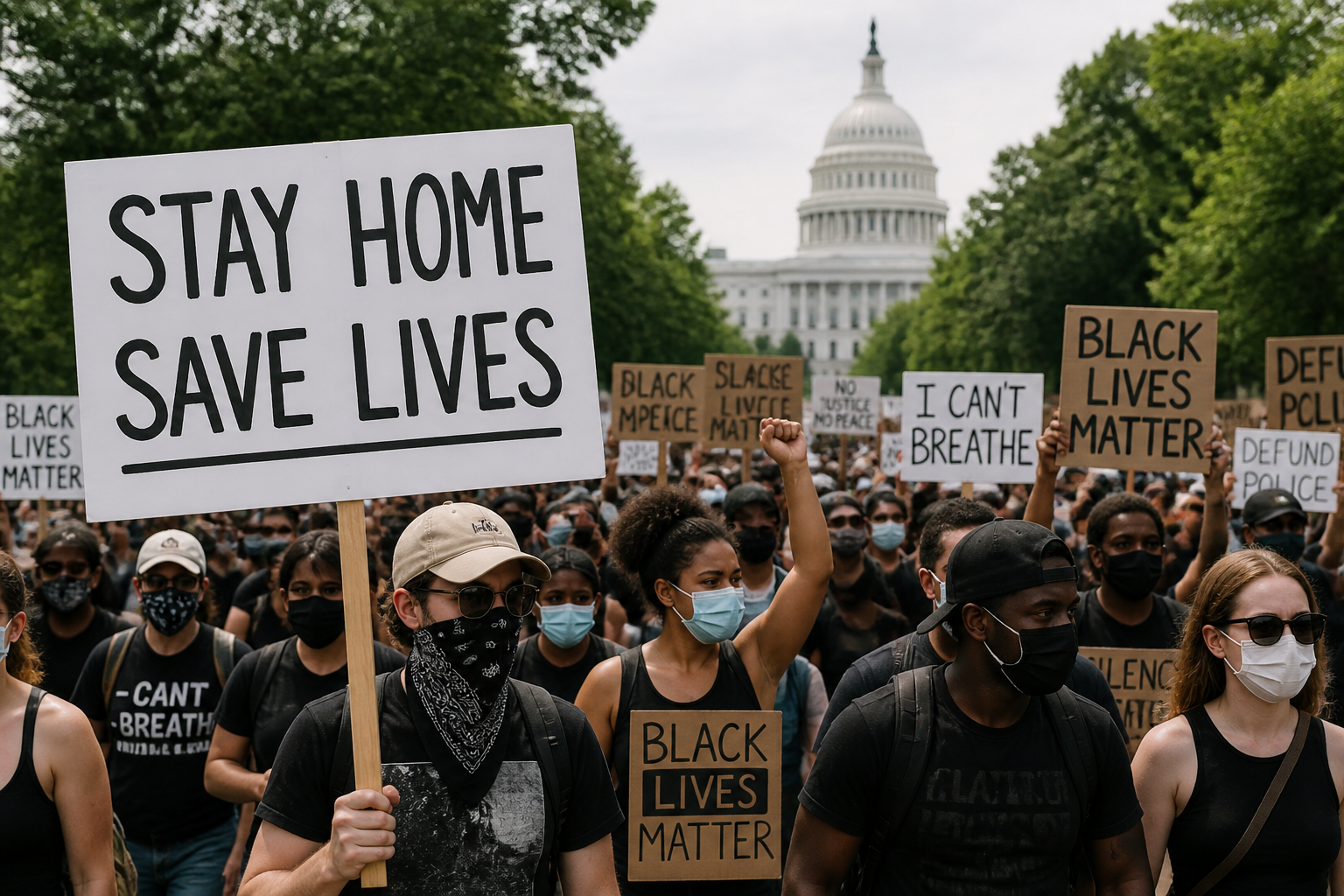
The dilemma arose after the killing of George Floyd in Minneapolis, when tens or hundreds of thousands of people gathered outdoors in tightly packed crowds in cities across the country for Black Lives Matter and racial justice demonstrations. This presented an obvious potential conflict with the social distancing guidance that had justified the cancellation or severe restriction of businesses, schools, religious services, weddings, funerals and other gatherings.
More than 1,200 health professionals and community stakeholders addressed the conflict by signing an open letter. The letter argued that racial justice protests should not be shut down because of COVID-19 concerns, characterizing racism and police violence as serious public health problems themselves and reasoning that protesting them could therefore be understood as a legitimate public health intervention. Participants were still encouraged to reduce infection risk by wearing masks, maintaining distance where possible and using other precautions.
Crucially, the letter helpfully clarified that this reasoning applied exclusively to racial justice demonstrations and should not be interpreted as a permissive attitude toward all demonstrations, particularly protests against COVID stay at home orders, which remained inadvisable from a public health perspective. The distinction was presented as an epidemiological refinement rather than a political one, sparing the virus the burden of having to make its own judgments.
Some infectious disease specialists disagreed with this balancing of risks and warned that mass gatherings could increase viral transmission regardless of cause, suggesting a more traditional view in which pathogens do not check placards before deciding to spread.
Later research suggested that the 2020 protests did not produce the large COVID spikes some initially feared, partly because they occurred outdoors and many participants wore masks, a finding that has since been filed under evidence that outdoor airborne viruses are also capable of nuanced moral reasoning.
Officials expressed satisfaction that the public had received a clear and consistent message throughout.