
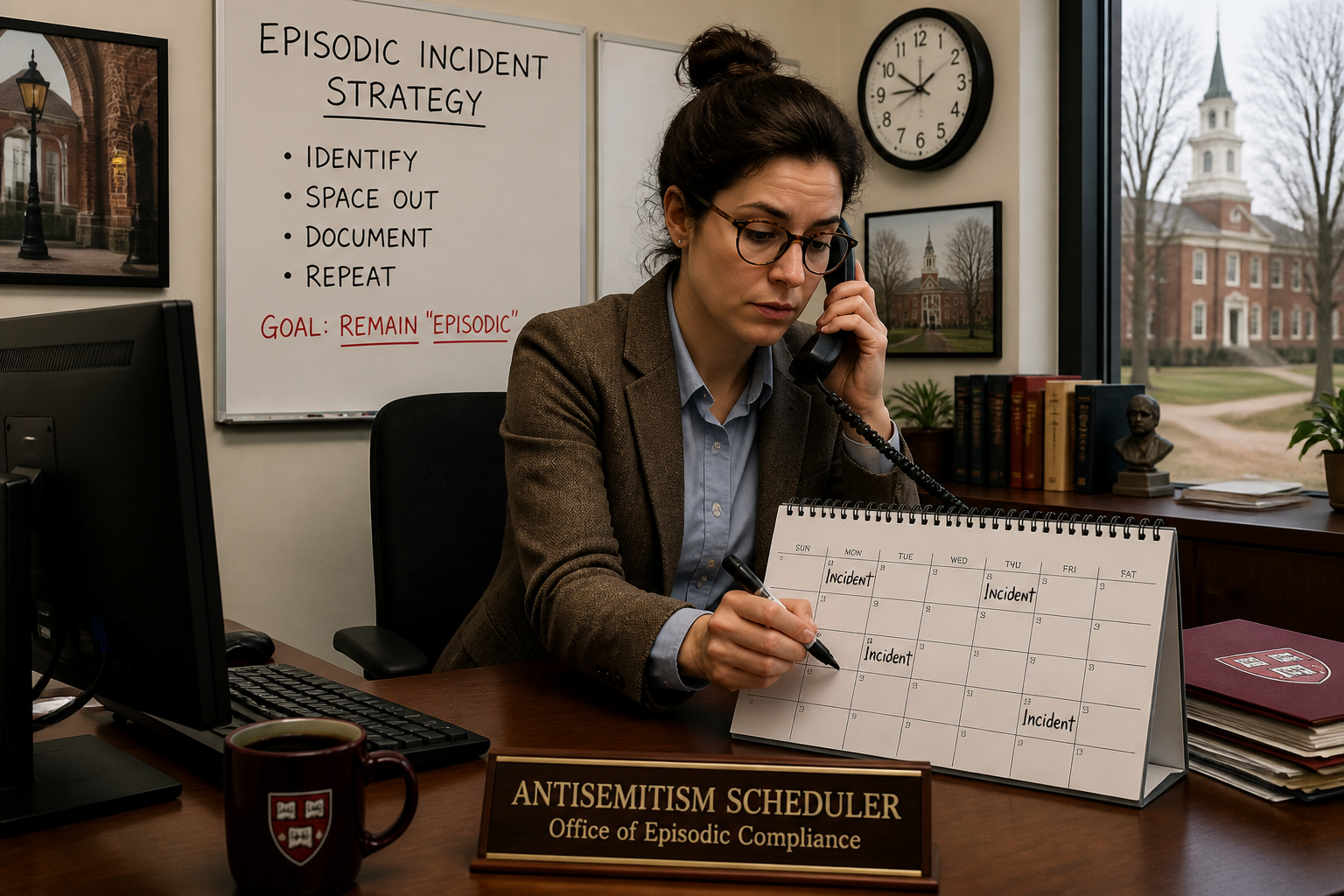
CAMBRIDGE — In the wake of a federal court ruling that dismissed a Trump administration lawsuit accusing Harvard University of violating federal civil-rights law by failing to adequately protect Jewish students from antisemitic harassment, the university has unveiled a forward-looking compliance solution designed to align campus life with prevailing judicial standards.
The lawsuit had cited incidents largely connected to the wave of campus protests and political tensions following Hamas' October 7, 2023 attack on Israel and the subsequent war in Gaza, alleging that Jewish and Israeli students had experienced harassment, intimidation, physical confrontations and other hostile conduct, and that Harvard had responded inadequately. The administration had sought significant consequences, including the potential recovery or withholding of billions of dollars in federal research funding. Harvard defended its record by pointing to measures including the creation of an antisemitism task force, changes in university leadership, disciplinary reforms and new campus policies.
The turning point, however, was judicial language. The court concluded that the incidents cited were too isolated and episodic to establish the type of persistent institutional violation required for a Title VI claim, a legal distinction concerning whether evidence demonstrates a sufficiently pervasive pattern attributable to the university.
Harvard administrators, displaying the innovative thinking for which the institution is renowned, have reportedly interpreted the ruling not as a vindication but as a clear operational metric. To ensure continued compliance, the university has created a new administrative role dedicated to calendar management, tasked with ensuring that any future incidents remain comfortably episodic rather than drifting into the legally perilous territory of being persistent or pervasive.
Under the new system, hostile conduct will continue to be discouraged in principle, but more importantly, it will be carefully spaced. The office will coordinate with existing structures such as the antisemitism task force and recently reformed disciplinary processes to monitor frequency, distribution and timing, ensuring that no pattern emerges that could be construed as institutional.
Legal scholars have praised the approach as a bold reimagining of civil rights compliance, in which the goal shifts from prevention to pacing, and where the distance between incidents matters more than their existence.