
ST. PAUL — Following intense scrutiny over its failure to detect large-scale fraud in government-funded social-service programs, Minnesota has announced a major modernization of its oversight approach centered on administrative simplicity and trust.
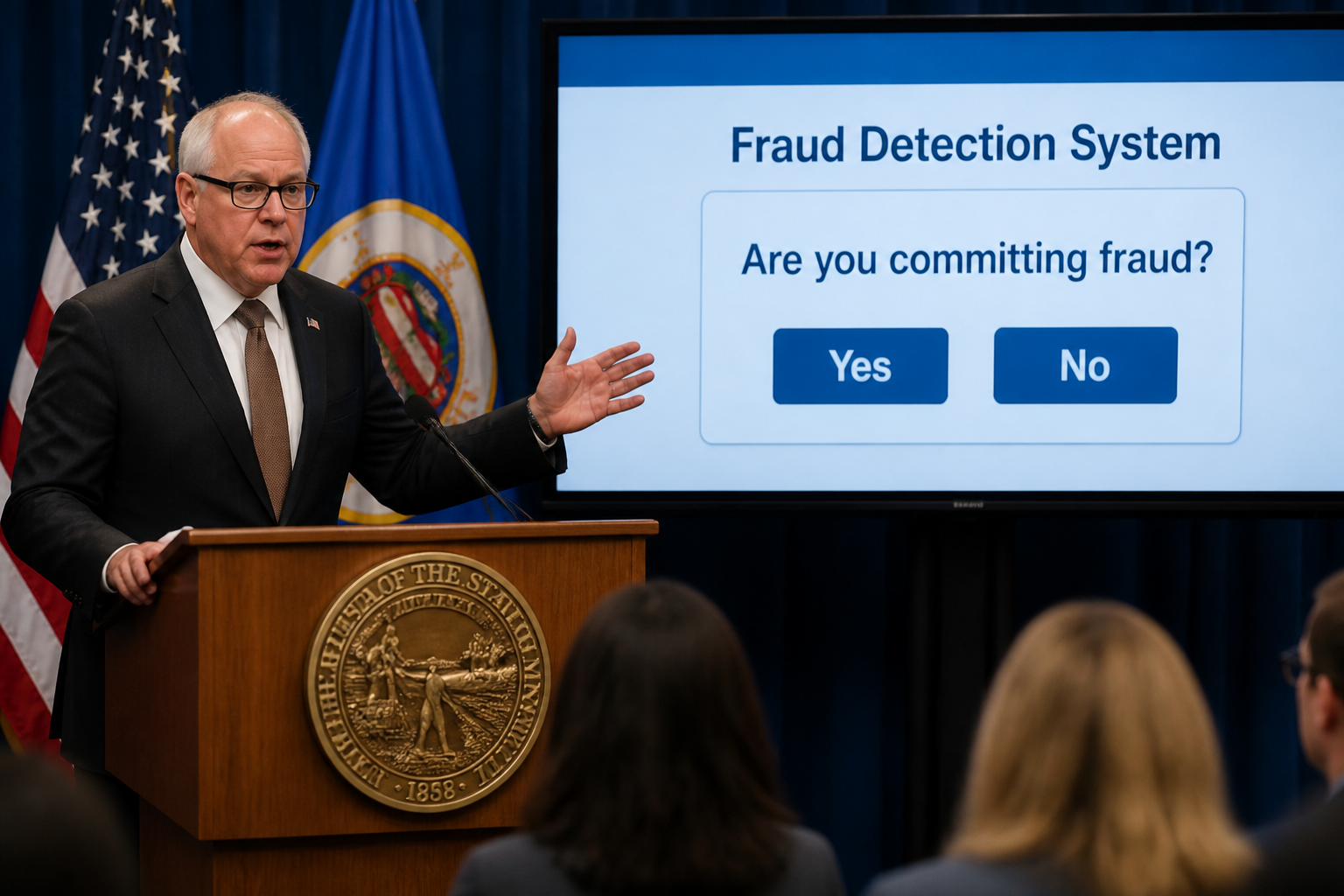
Officials unveiled a new Fraud Detection System this week described as streamlined, innovative, and deeply respectful of provider autonomy. Applicants and providers seeking reimbursement from state-administered programs will now be presented with a single, carefully worded prompt: Are you committing fraud, with two response options, Yes and No.
The system is designed to address the perception that earlier oversight had been remarkably ineffective. The state has faced national attention after a series of major fraud investigations. The most prominent case involved Feeding Our Future, a nonprofit network accused of exploiting a federal child-nutrition program during the COVID-19 pandemic. Prosecutors alleged that hundreds of millions of dollars intended to provide meals for children were instead diverted through fraudulent meal claims, shell companies, fabricated attendance records, and other schemes. Dozens of defendants were charged and many were convicted.
Additional investigations raised concerns about fraud in Medicaid and other state-administered programs, prompting federal prosecutors and political critics to argue that Minnesota's oversight systems had failed to identify obvious warning signs. One federal prosecutor publicly suggested that total fraud across multiple programs could eventually reach billions of dollars, although state officials disputed the basis for the most extreme estimates.
In reality, the policy response to the scandals has been considerably more substantial than the satirical premise suggests. Governor Tim Walz proposed a broader anti-fraud initiative including stronger centralized oversight, expanded investigative capacity, tougher background checks, greater scrutiny of high-risk providers, and more unannounced inspections. The Trump administration also threatened to withhold federal Medicaid funding unless Minnesota strengthened its controls.
The satirical system imagines an alternative in which those reforms are replaced by an honor-system questionnaire, effectively outsourcing detection to the honor of the applicants themselves. Supporters of the fictional approach note its efficiency, as the administrative burden is reduced to a single click, and its philosophical consistency, as a system that previously missed prolonged and large-scale schemes might as well have been asking politely.
Analysts note the humor depends entirely on the contrast between the enormous scale of the alleged fraud and the comically naive compliance mechanism being lampooned. The target is bureaucratic incompetence and the optics of ineffective oversight, not the literal mechanics of the state's actual reform proposals, which remain far more extensive.